
Fixed, Folding, or Reefer? How to Choose the Right Forklift Container Ramp
Loading and unloading shipping containers is a daily task in logistics, but the transition from the ground to the container floor presents a major safety hurdle. Most standard shipping containers sit approximately 150mm to 200mm off the ground. Bridging this gap requires a properly rated forklift container ramp to ensure your team remains safe and your equipment avoids costly damage.
Whether you are handling standard general purpose (GP) containers or specialised cold storage units, selecting the right ramp is critical. This guide breaks down the different types—from fixed to refrigerated container ramps—to help you make the right choice.
1. Standard One-Piece Container Ramp (Fixed)
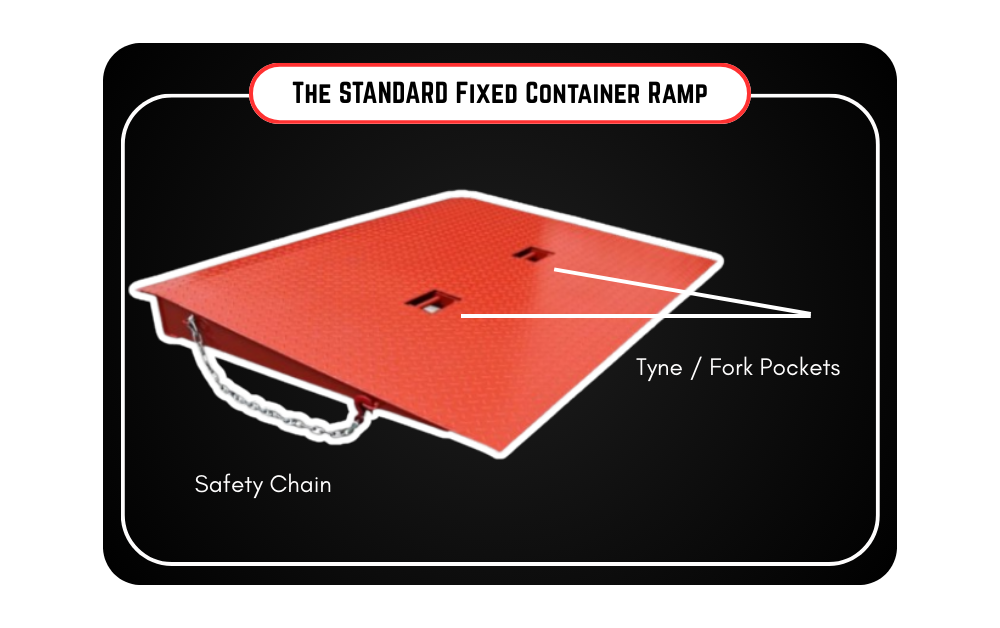
The standard one-piece forklift container ramp is the industry workhorse. Constructed from heavy-duty steel, it is designed to bridge the standard ~160mm step into a General Purpose shipping container.
How it works: The ramp features fork pockets (tyne pockets) located at the front, allowing a forklift to easily lift and position the unit at the container door.
Best Application: High-volume warehouses where the ramp does not need to be moved frequently or stored in tight spaces.
Pros: Extremely durable with no moving parts; cost-effective.
Cons: Heavier to move; fixed length offers less flexibility on uneven ground.
Browse our range of Heavy Duty Fixed Ramps
2. Folding Container Ramp
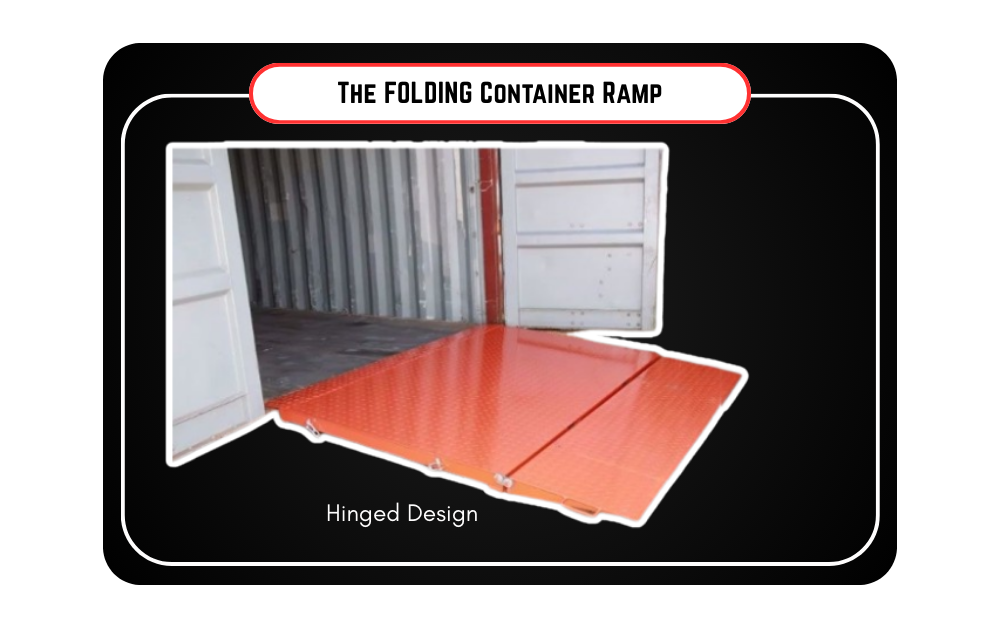
For businesses with limited yard space, the folding container ramp is the optimal choice.
How it works: These ramps feature a hinged design that allows the unit to fold back onto itself, significantly reducing its footprint when stored.
Best Application: Smaller yards, or sites where the ramp is stored indoors when not in use.
Pros: Easy to store; often easier to handle on uneven terrain due to the segmented design.
Cons: Moving parts (hinges) require occasional maintenance.
Shop our Space-Saving Folding Ramps
3. Refrigerated Container Ramp (Reefer Containers)
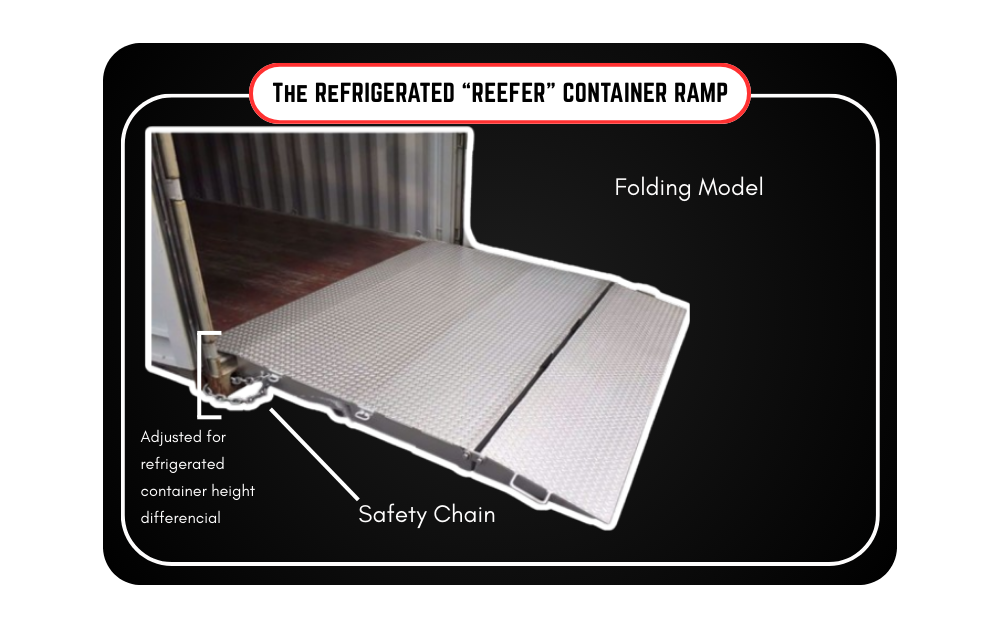
If your operations involve cold chain logistics, a standard ramp will not work. Refrigerated container ramps are engineered specifically to handle the unique design of Reefer containers.
The Problem: Refrigerated containers feature a raised floor with deep ribbing for airflow, often sitting higher than standard containers (sometimes 200mm+). They also have a distinct edge that blocks standard ramps from sitting flush.
The Solution: A refrigerated container ramp utilises a modified "lip" and geometry to clear this obstacle, ensuring the forklift does not hit the container edge or damage the delicate aluminium floor. Reefer ramps are also available as either fixed or folding.
Best Application: Food distribution and cold storage.
View our specialised Refrigerated (Reefer) Ramps
4. Truck Ramps and Container Accessories
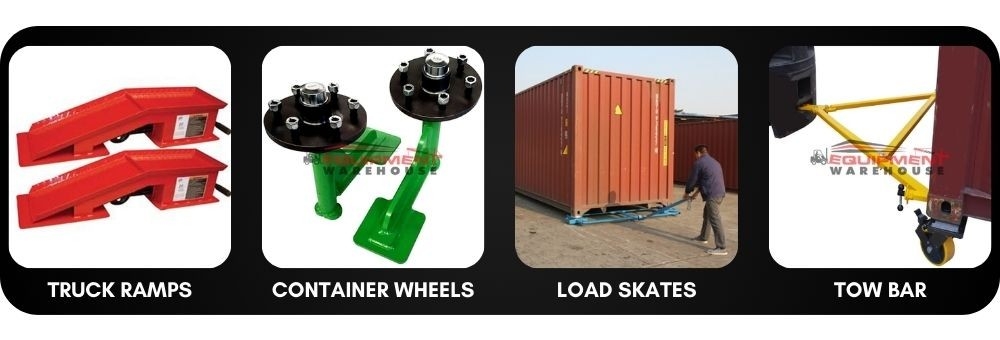
Beyond our core container ramps, we stock a comprehensive range of handling equipment designed to keep your operations moving. This includes high-strength truck ramps, essential for safely loading heavy plant machinery, vehicles, and equipment onto flatbeds or transport trucks.
We also provide specialised mobility solutions for shipping containers, such as shipping container wheels (castors) and load skates, which allow you to maneuver heavy units across hard surfaces without the need for a crane. For easier handling, pair these with our container tow bars, which lock securely into corner castings so you can tow containers using a standard forklift or tractor. To round out your heavy-lifting toolkit, our hydraulic container jacks provide the power you need to safely lift and level loaded containers. All items are typically in stock and ready for fast dispatch Australia-wide to get your site fully operational.
Check out our full range of container ramps and accessories.
Important Things to Consider
Before purchasing a forklift container ramp, you must verify technical specifications - not just for the ramp, but for your forklift as well.
1. Forklift Compatibility (Container Mast)
It is critical to ensure you have the right equipment for the job. You must use a container mast forklift when loading containers.
The Risk: A standard forklift mast often extends vertically as soon as you lift the forks. If you drive up a ramp into a confined container, a standard mast will hit the roof of the container before the load is high enough to stack.
The Requirement: Ensure your fleet includes a forklift with a container mast (or "free lift" mast) to safely operate inside the container without striking the ceiling.
2. Safe Working Load (SWL) in Tonnes
Container ramps come in a range of weight capacities. To determine what capacity you need, you must calculate the Total Rolling Weight:
Tip: A standard 2.5-tonne capacity forklift can actually weigh over 4 tonnes on its own. Ensure your ramp is rated for the total mass (e.g., 6 to 8 tonnes), not just the pallet weight.
3. Floor Height Compatibility
Measure the height of the container floors you receive most often.
Standard GP: Approx. 150mm - 160mm.
Reefer: Can be 200mm or higher.
Warning: Using a standard ramp on a high reefer floor creates a dangerous "step" or lip that can destroy forklift tyres and cause load instability.
Ready to optimise your loading dock?
Investing in the correct forklift container ramp ensures your goods move quickly and your staff go home safe. Equipment Warehouse has stock of forklift container ramps in Adelaide, Brisbane, Sydney, Melbourne and Perth, and competitive pricing for delivery Australia-wide. Give us a ring and receive a quote within the hour!

